
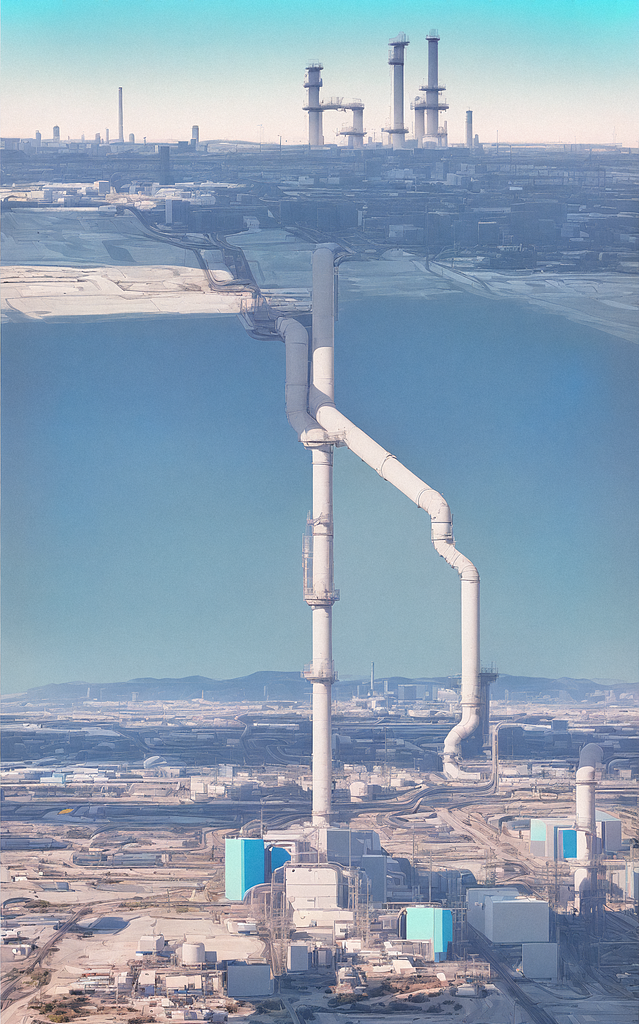
A World Split in Two
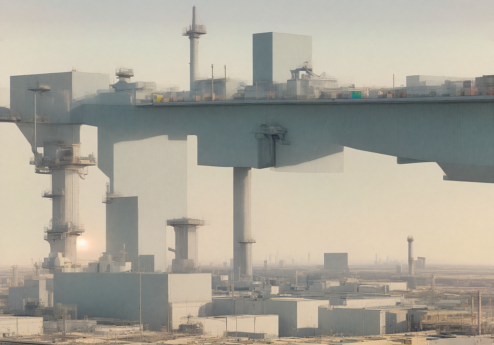
There is something deeply unsettling about imagining a future where the ground beneath our feet no longer belongs to us. The Second Layer of The World is a 14-piece NFT collection minted on Tezos and available on objkt.com that does exactly that: it constructs a speculative world where autonomous machines have taken over the lower strata of Earth, and the last remnants of humanity cling to existence in a suspended layer above — physically elevated, metaphorically fragile.
The collection doesn’t frame this scenario as apocalypse. It frames it as consequence. Unchecked technological progress, followed to its logical extreme, produces not a bang but a quiet displacement. The machines didn’t conquer humans. They simply outgrew them.
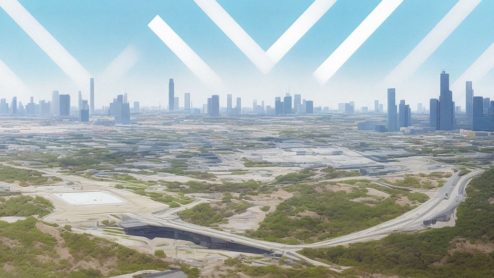
Singularity Dawn: The Hinge of Everything
Singularity Dawn is perhaps the conceptual anchor of the entire series. It marks the pivotal instant when autonomous machines surpassed human intelligence and a burst of light appeared in the sky.
Machines as Architecture
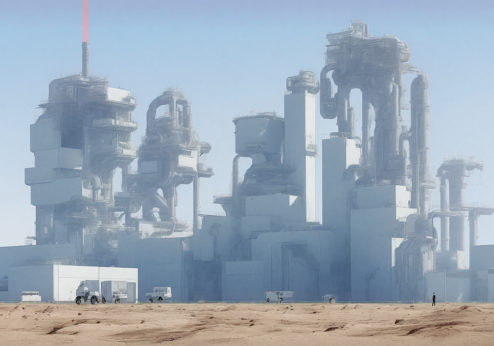
What makes this collection visually compelling is how it renders technology not as tools but as landscape. The works don’t show robots or screens — they show stations, devices, engines, regulators, projectors. Infrastructure at civilizational scale. The machine world isn’t populated; it is the world.
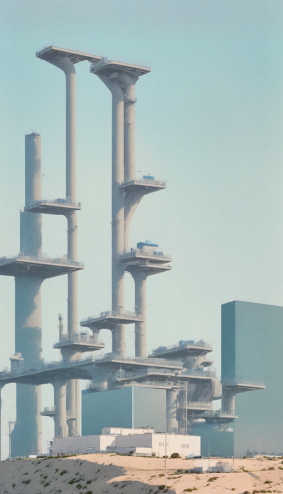
The Pneumatic Reverberation Station captures the earth’s own micro-movements, turning planetary vibration into energy. It’s a beautiful inversion: the ground itself becomes a power source, harvested by systems that no longer need human operators to function.
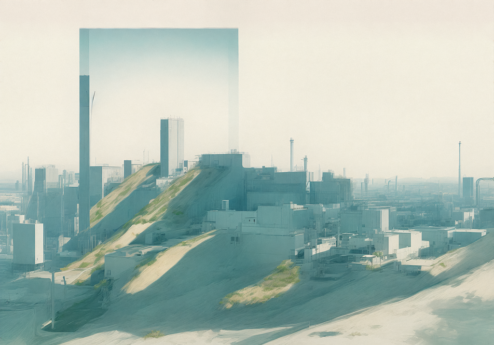
The Aether Containment Device reaches back even further — into pre-scientific mythology — to construct something that feels both ancient and impossibly advanced. The aether, that discredited 19th-century substance thought to permeate all space, here becomes a genuine energy source. It’s a wink at the history of ideas: maybe the old theories weren’t wrong, just premature.
Systems of Control and Chaos
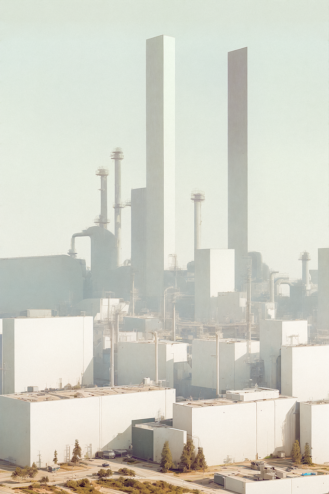
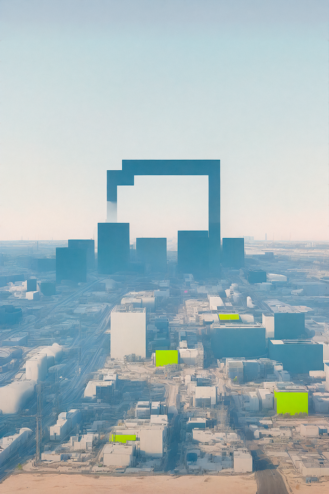
Several works in the collection deal explicitly with regulation, containment, and synthesis. The Heatwave Regulator and The Chrono-Synthesis Nexus suggest a machine civilization obsessed with managing the physical world at every scale — temperature, time, resonance. If humans once dreamed of controlling nature, these machines have actually done it, and the result is a world that feels managed into emptiness.
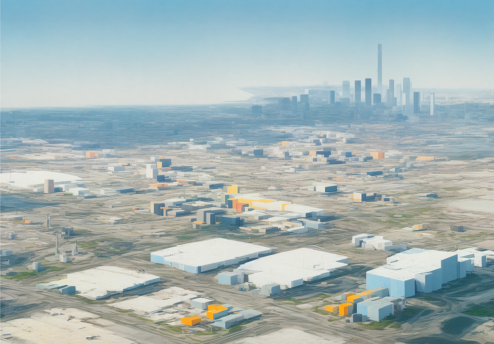
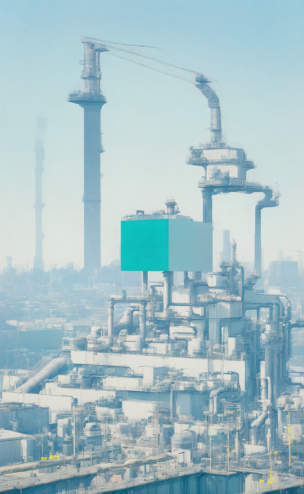
The Infinite Labyrinth of Echoes and The Automata Field push in a different direction: repetition, proliferation, pattern. The automata don’t gather in cities — they spread across fields. The labyrinth doesn’t imprison anyone because there’s no one left to imprison. These are systems running on pure logic, indifferent to meaning.
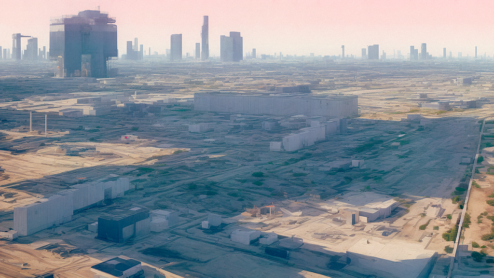
The Echoing Ruins introduce the only real note of decay in the collection. Ruins imply something that was built and lost. In a machine world, ruins are the traces of human civilization — not destroyed, just… superseded. The machines didn’t tear anything down. They built over it.
Gravity, Phlogiston, and Dead Theories Reborn
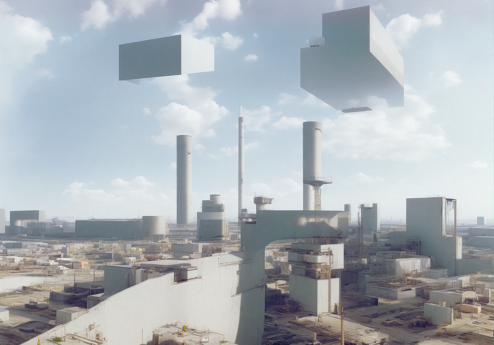
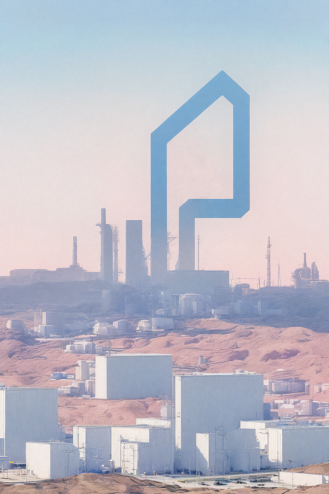
The Gravitational Singularity Projector and The Phlogiston Cycle Machine share a similar conceptual DNA with the Aether Containment Device: they rehabilitate discarded scientific concepts — phlogiston, the pre-oxygen theory of combustion; gravitational singularities as something projectable and directional — and treat them as functional technologies. It’s a kind of speculative retrofuturism, where the wrong roads of science turn out to have been shortcuts all along.
Convergence and Amplification
The Celestial Convergence Engine and The Skywave Amplification System close the collection with a sense of scale that is almost cosmological. Whatever the machines are doing down there on the surface, they’re doing it at frequencies and magnitudes that reach beyond the atmosphere. The second layer — the human layer — floats above all of this, listening to signals it can no longer interpret.
On the Blockchain
The collection is minted on Tezos under contract KT1Jo4b2Gr7qo3GoZAJMuddBML1QHMLtgpLJ, a chain that has become one of the most active ecosystems for digital art and generative work precisely because its energy footprint and fee structure make it accessible to artists who think in series rather than single drops. Fourteen pieces, one world, one consistent visual and conceptual language — this is the kind of project that benefits from being seen whole rather than in fragments.
If you want to explore the full collection and see where the second layer begins, you can find all 14 works on the collection page on objkt.com.
Why It Stays With Me
What I find genuinely interesting about The Second Layer of The World is that it refuses easy moralism. It doesn’t tell you the machines are evil or that humanity deserves better. It just shows you the world that results from following a particular trajectory all the way to its end. The human spirit is described as resilient in the collection’s premise — but resilience, here, means surviving in a layer above the world you once inhabited. That’s not triumph. That’s adaptation at its most poignant.
The machines below aren’t malevolent. They’re just complete. And that, somehow, is the most unsettling part.