
Somewhere between memory and hallucination
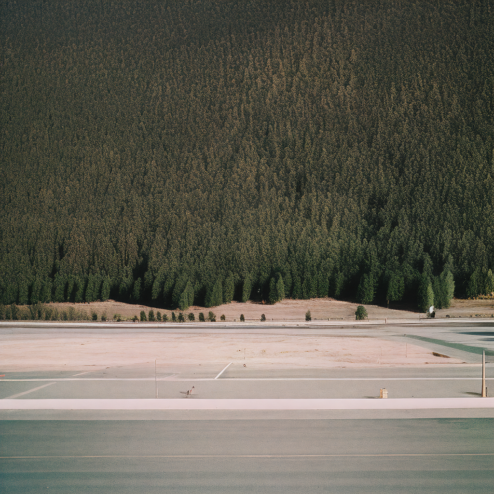
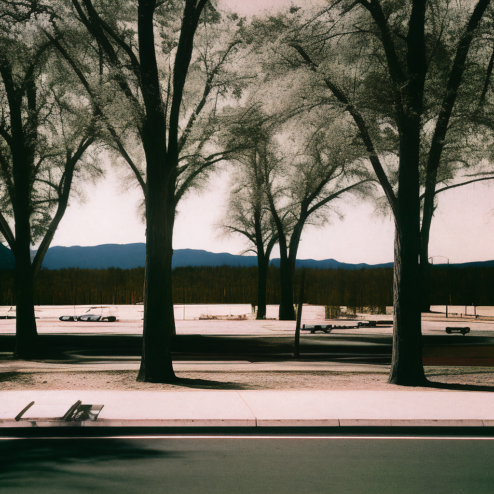
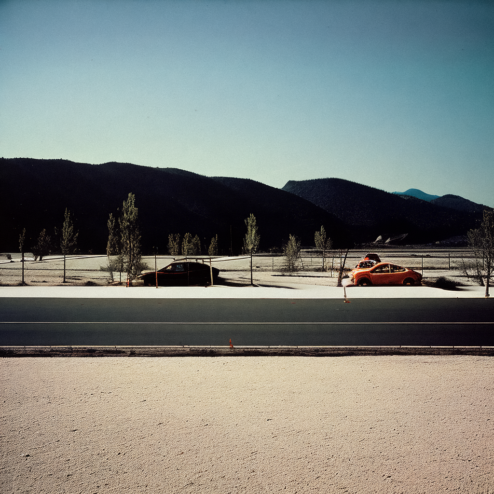
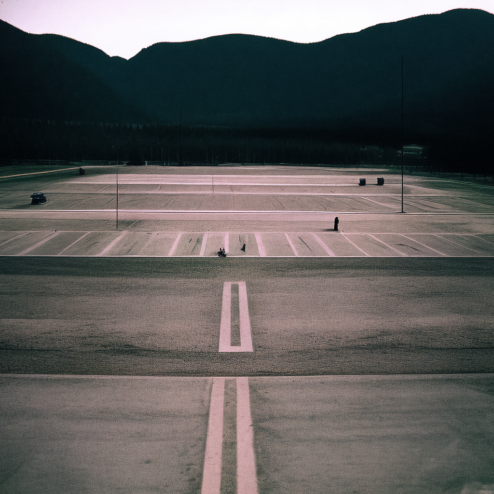
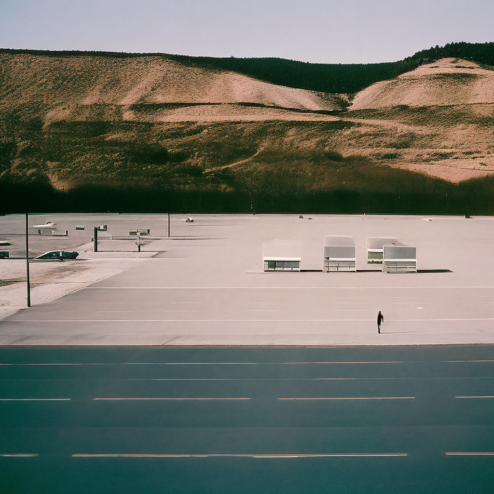
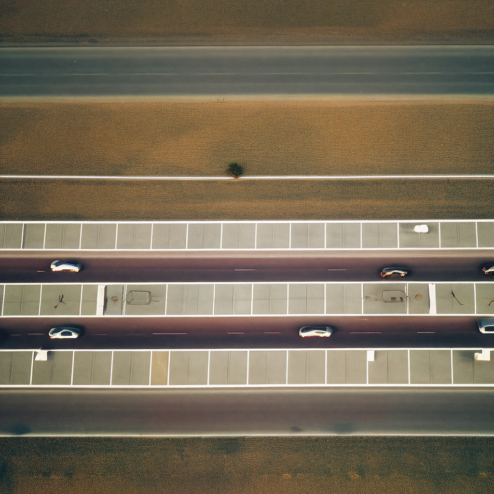
There is something deeply unsettling about a parking lot at the wrong hour. Empty, overlit, geometrically rigid — yet somehow breathing. With Parking in the Middle of Nowhere, I wanted to explore exactly that feeling: spaces that your brain insists are real, even when the logic behind them starts to unravel the moment you look too closely.
The series collects 16 AI-assisted artworks, each depicting a parking lot that does not exist — or at least, should not. The line between plausible and impossible is thin here, deliberately so. These are not glitch aesthetics, not obvious digital artifacts. The uncanny lives in the details: a shadow that falls the wrong way, a perspective that shifts imperceptibly, a light source with no origin.
The process: AI as a collaborator, not a shortcut
I keep seeing the phrase “AI-generated art” used as a dismissal, as if the tool eliminates the intention. That has never been my experience. Working with AI image generation is closer to photography than people assume — you develop an eye, you learn to read what the model offers and what it refuses, you iterate, discard, and push further. The prompt is only the beginning. What matters is knowing when to stop and when something actually works.
For this series, the visual research started from real reference material: documentary photographs of suburban infrastructure, brutalist parking structures, peripheral urban spaces. The AI became a kind of hallucination engine — fed with those references and pushed toward something just slightly beyond recognition.
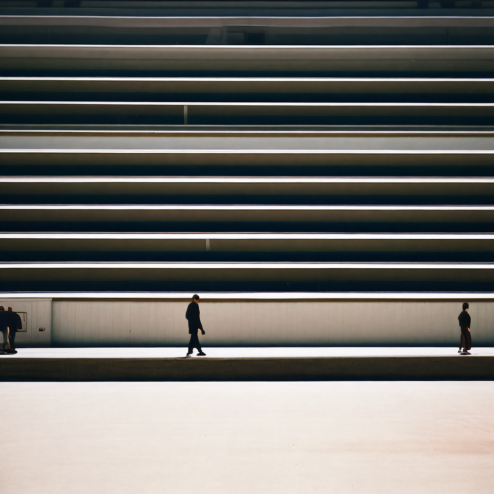
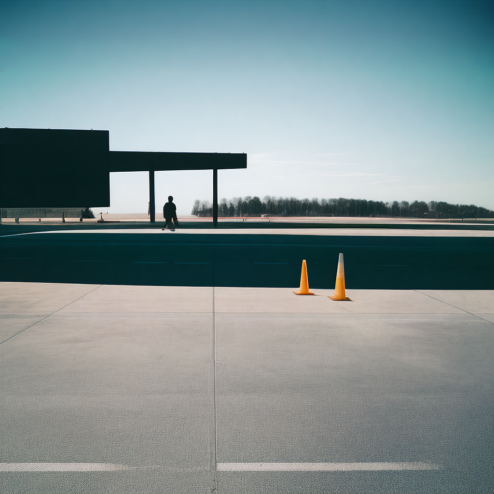
Each piece went through multiple rounds of generation and selection. I was looking for a specific quality: the image had to feel like a photograph you might have taken yourself, from a trip you can almost remember. Familiar enough to trigger a place-memory, wrong enough to make you doubt it.
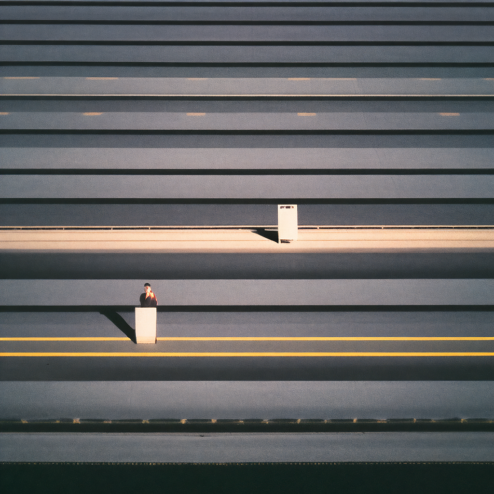
Liminal spaces as a visual language
The internet rediscovered liminal spaces a few years ago — those transitional, in-between places that feel haunted by their own emptiness. Corridors, malls after closing time, hotel lobbies at 3am. Parking lots fit perfectly into that taxonomy. They are infrastructurally mundane and architecturally forgotten, designed purely for function, never for presence. No one is meant to linger in a parking lot. And yet.
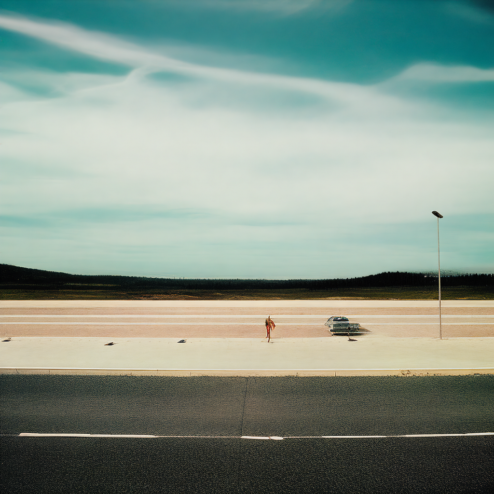
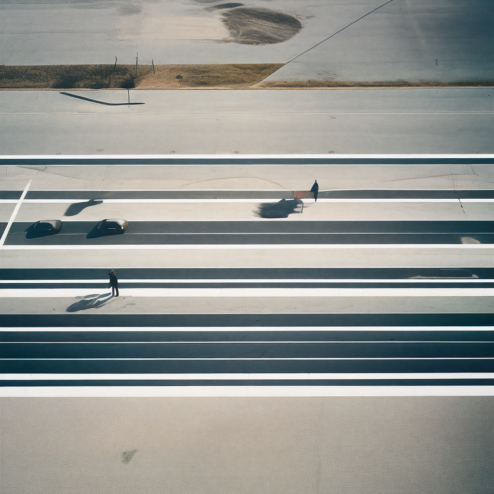
What I find compelling about this visual territory is not the nostalgia or the creepiness that the liminal space aesthetic often chases. It is the philosophical implication: these are places that exist in service of other places. They are nowhere, defined only by where you came from and where you are going. Parking in the middle of nowhere takes that logic to its conclusion — remove the origin and the destination, and what remains?
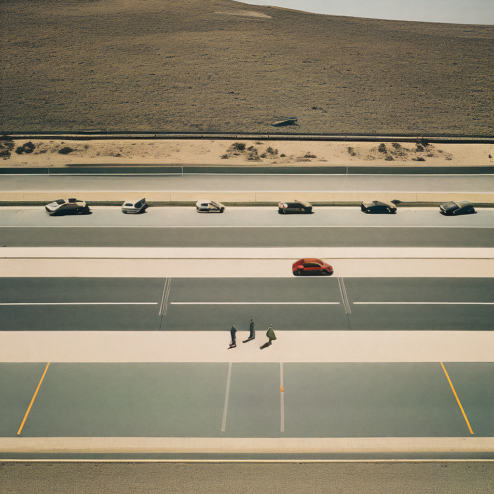
The collection on Tezos
I chose to mint this series on Tezos for reasons that have become standard for my practice: the energy footprint is low, the collector community tends to be genuinely interested in the work rather than in speculation, and objkt.com provides a clean, direct interface between the work and whoever decides to live with it.
The contract address is KT1TQRYkVJrRx2uRMsJtKayWjDcVyTjaXxVH — 16 pieces, each a distinct location in this geography of nowhere.
Each lot, its own nowhere
The 16 pieces in the series are not meant to be read as a sequence, but they do accumulate. Spending time with several of them together, you start to notice a shared grammar: certain color temperatures, a consistent quality of light that feels artificial even when it mimics the sun, sightlines that open onto nothing in particular.
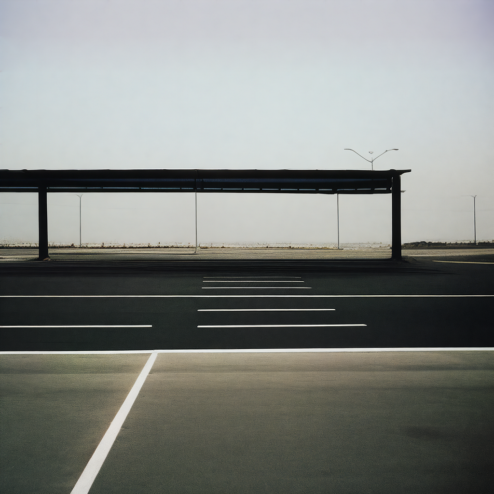
Some lots are open-air, flooded with that particular grey-white light of overcast afternoons. Others are structured, multi-level, the kind of concrete architecture that was never designed to age well. A few feel almost domestic in scale — small, local, attached to a strip mall that the image keeps just out of frame.
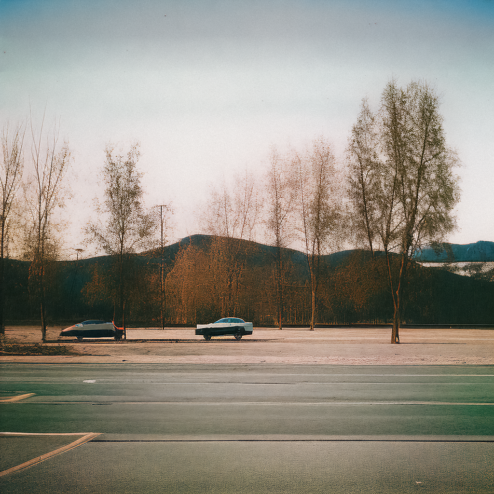
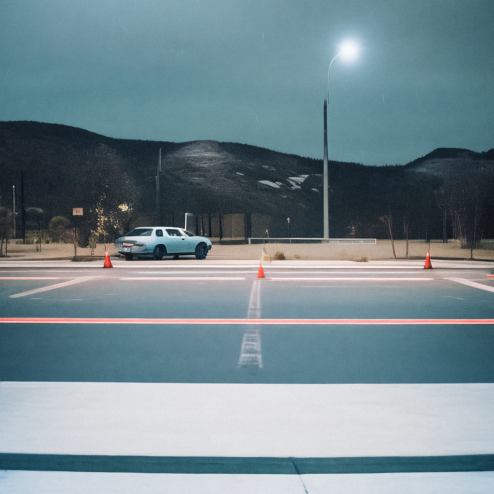
Unreal places, which often look like real places, where the line between what is logical and illogical is just a veil.
That is the description I wrote for the collection, and I keep finding it accurate. The veil is the point. It is not torn away — it stays in place, and you have to decide how much you trust what you are seeing.
Collecting and context
Digital art on blockchain has matured enough that the conversation can finally move past the infrastructure and back to the work itself. Tezos has been particularly good for that — there is a cohort of collectors and artists who are thinking seriously about what it means to own and distribute image-based work in this format.
If this series speaks to you — if you have ever stood in a parking lot and felt, for a second, completely unmoored from where you were — the full collection is available on objkt.com, where each piece can be explored and collected individually.
Nowhere has never looked quite so specific.